

Three Common Problems Caused by Wisdom Teeth
- Wisdom teeth often cause problems because there is not enough space for them to erupt normally in the jaw.
- Impacted wisdom teeth can damage nearby teeth, leading to cavities, crowding, or root resorption over time.
- Problems may develop slowly and quietly, which is why regular exams and X-rays are important.
- Pain that comes and goes is often a sign of ongoing irritation or infection, not a resolved issue.
- Early evaluation and timely removal can prevent more complex dental and orthodontic treatment later.
For many people in Murrieta and beyond, there simply isn’t enough room for wisdom teeth to grow in comfortably. That’s why they often become impacted, push against other teeth, or create painful pressure in the jaw.
Because they sit so far back, they’re also harder to keep clean, which makes them prone to infection and cavities. Left untreated, wisdom teeth can quietly cause bigger dental problems over time.
That’s why wisdom teeth removal is such a common procedure. Taking them out early can prevent bigger issues down the road. Understanding the signs that something isn’t right can help you make the best decision for your long-term oral health.
Do wisdom teeth actually cause problems?
Yes, they often do. While some people never develop noticeable issues, many experience impaction, infection, or nerve-related pain. The first signs of wisdom teeth coming in can include:
- Tender gums in the back of the mouth
- Swelling
- Soreness when chewing
- Pressure behind the last molars
Even if the discomfort fades, recurring pain is usually a warning sign that the teeth aren’t erupting correctly.
Should you have your wisdom teeth removed?
It’s natural to wonder if wisdom teeth removal is really necessary. For some people, wisdom teeth erupt normally and never cause trouble.
For many others, though, they eventually create problems.
- When removal is recommended: In some cases, patients report symptoms of wisdom tooth pressing on a nerve, such as tingling or radiating pain in the jaw, which is a clear signal that extraction may be necessary.
- Why early removal helps: Dentists often recommend taking wisdom teeth out in the late teens or early 20s. Younger patients usually heal faster, and removing them early can prevent bigger issues later on.
- When removal may not be needed: If your wisdom teeth are fully in place, painless, and easy to clean, your dentist may suggest monitoring them instead of removing them right away. Regular checkups and X-rays are important in these cases.
What kind of issues can wisdom teeth cause?
| Limited space in the jaw | Most jaws do not have enough room for wisdom teeth, which increases the risk of impaction and pressure on nearby teeth. |
| Tooth decay and cavities | Wisdom teeth are difficult to clean, allowing plaque and bacteria to damage nearby molars that were previously healthy. |
| Blocked tooth eruption | Wisdom teeth can push against second molars, preventing them from erupting properly and disrupting bite alignment. |
| Damage to neighboring teeth | Pressure from impacted wisdom teeth can cause root resorption, silently damaging adjacent teeth over time. |
| Infection and wider health effects | Untreated wisdom tooth infections can spread beyond the gums, affecting the jaw, sinuses, and overall well-being. |
Here are the three most common dental problems linked to wisdom teeth in depth:
1. Decay & cavities on the adjacent teeth
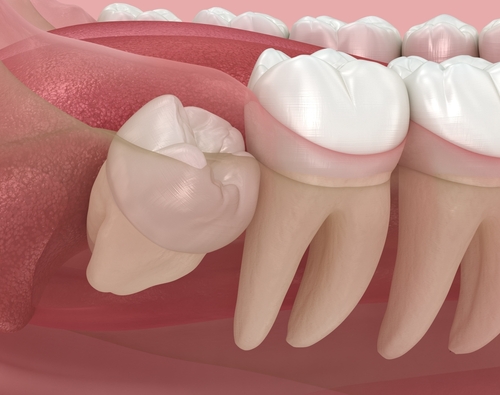
Because wisdom teeth are difficult to clean, food, plaque, and bacteria often get stuck between them and the neighboring molar. Over time, this leads to tooth decay on a tooth that may have been perfectly healthy before.
Why it matters: Untreated decay can spread quickly and require root canals, crowns, or even extraction of the damaged tooth. This problem is often preventable when wisdom teeth are removed before they cause harm.
2. Blocking other teeth from erupting normally
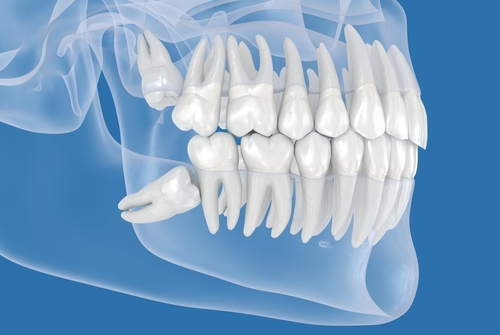
Sometimes wisdom teeth grow at the wrong angle and push directly into second molars, preventing them from erupting as they should.
Why it matters: This can create crooked teeth, an uneven bite, and difficulty keeping the area clean. The result is often a need for extensive orthodontic treatment, longer time in braces, or additional oral surgery. Early removal can prevent these complications.
In the first image, the upper second molars on both sides (red arrows) are being held back because the wisdom teeth above them are pushing them forward into the first molars.
This pressure keeps the second molars trapped, so they can’t break through the gums as they should. You can see the difference when you look at the lower jaw—those second molars have erupted normally.
In the second image, the lower right wisdom tooth is blocking the second molar below it (blue arrow), stopping it from coming in. Because that molar is stuck, the upper second molar (red arrow) has started to “hypererupt,” meaning it’s dropping down lower than normal in an attempt to make contact.
This misalignment throws off the bite and often leads to complex orthodontic issues that need significant treatment to fix.
3. Damage or resorption of neighboring teeth
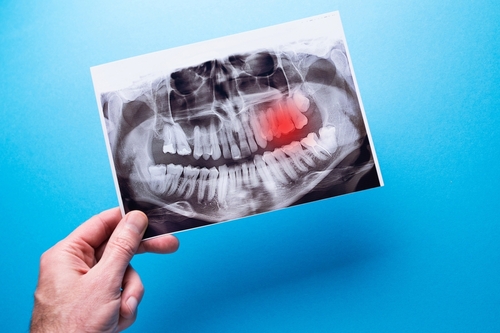
Impacted wisdom teeth don’t just push against nearby teeth—they can cause resorption, which is when the pressure gradually wears away the tooth root next to it.
Why it matters: In severe cases, both the wisdom tooth and the adjacent molar are lost. Because resorption happens silently at first, dental X-rays are critical for catching the problem early.

Can wisdom teeth cause other body issues?
Yes. Infection from wisdom teeth can spread beyond the gums and affect the jaw, throat, and even sinuses. In rare cases, untreated infections can spread to other areas of the body, becoming a serious medical concern.
Constant pain or swelling may also affect eating, sleeping, and overall quality of life. Some patients develop an early stage wisdom tooth infection without realizing it, where gum tenderness and mild swelling gradually worsen until treated.
What happens if you leave wisdom teeth in too long?
Leaving impacted or partially erupted wisdom teeth untreated can result in:
- Chronic gum infection (pericoronitis)
- Cavities on neighboring molars
- Jaw cysts or tumors in rare cases
- Long-term nerve damage if pressure continues
- Loss of both the wisdom tooth and adjacent teeth
In other words, avoiding treatment may turn a simple extraction into a much more complicated problem later on.
Many people wonder why does wisdom tooth pain come and go, and the answer is that irritation or infection around the tooth can flare up when food gets trapped or when pressure builds, then ease temporarily before returning.
How do I know if my wisdom teeth are coming in correctly?
A healthy wisdom tooth eruption usually causes mild pressure, not severe pain. You can use the checklist below to help determine whether things look normal.
Signs your wisdom teeth are coming in correctly
- Mild pressure in the back of the mouth
- Gums that are pink, not red or swollen
- No bleeding when brushing or flossing
- Enough space behind the second molar
- Upright positioning on dental X-rays
Signs your wisdom teeth may not be erupting properly
- Ongoing or worsening pain
- Swelling in the gums or jaw
- Crowding or pressure on nearby teeth
- Bleeding or tenderness around the gums
- Throbbing aches or jaw tightness
If you notice any wisdom tooth pain symptoms from the second list, it’s a sign that the tooth isn’t erupting properly and that you should see a dentist sooner rather than later. Early evaluation can help prevent more serious problems and make treatment simpler.

What to expect during wisdom tooth extraction?
For many patients, fear of the unknown is the hardest part. The good news? Wisdom tooth surgery is one of the most common dental procedures, and your dental team will make sure you’re comfortable.
- Before the procedure: Your dentist or oral surgeon will explain anesthesia options, from simple numbing to sedation, so you won’t feel pain during the extraction.
- During surgery: The tooth is carefully loosened and removed. If it’s impacted, a small incision may be made to access it. The procedure usually takes less than an hour, even if all four wisdom teeth are removed.
- Afterwards: You’ll be given clear instructions for home care. Most patients go home the same day and rest comfortably.
How to prepare for wisdom tooth surgery
Taking a few steps before your procedure helps you feel confident and comfortable.
- Arrange a ride home, since sedation can make you groggy.
- Plan for a couple of quiet days with your favorite movies, soft foods, and ice packs ready.
- Follow your dentist’s pre-op instructions, such as not eating before sedation.
- Wear comfortable clothing and arrive a little early so you’re not rushed.

What to do if wisdom tooth pain becomes an emergency?
Sometimes wisdom teeth don’t give you much warning. If you experience severe swelling, fever, or intense pain, it’s time to call a dentist right away.
- Short-term relief: Saltwater rinses, over-the-counter pain relievers, and cold compresses may help until you can be seen.
- When to seek urgent care: If you have difficulty swallowing, opening your mouth, or notice spreading swelling, don’t delay — infections can spread beyond the mouth if untreated.
- The good news: Oral surgeons can usually provide immediate relief, whether through antibiotics, drainage, or emergency extraction. Acting quickly prevents bigger problems.
Who in Murrieta I can turn to for professional wisdom teeth removal?
You’re in the right place! Here at Temecula Dental Implants & Oral Surgery, we provide expert consultations for wisdom teeth so you can get clear answers and peace of mind.
If your wisdom teeth are impacted or starting to cause problems, an early evaluation is the best way to prevent more serious issues down the road. Whether you’re in Murrieta, or nearby, you can count on our team to give you the care you need when you need it.